
Alan Parsons Project
As indicated by its name, the
Alan Parsons Project was not a band so much as a concept overseen by the
titular Parsons, a successful producer and engineer. Born in Britain on
December 20, 1949, he began his musical career as a staff engineer at EMI
Studios, and first garnered significant industry exposure via his work on the
Beatles' 1969 masterpiece, Abbey Road. Parsons subsequently worked with Paul
McCartney on several of Wings' earliest albums; he also oversaw recordings from
Al Stewart, Cockney Rebel, and Pilot, but solidified his reputation by working
on Pink Floyd's Dark Side of the Moon.
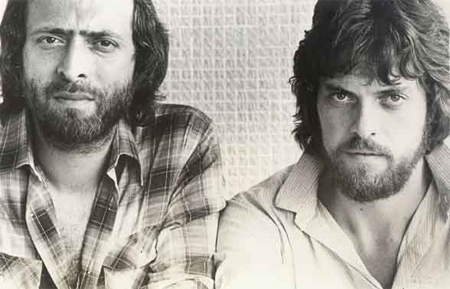
Influenced by his work on
Stewart's concept album Time Passages, Parsons decided to begin creating his
own thematic records; along with songwriter Eric Woolfson,
he soon founded the Alan Parsons Project. Although Parsons played keyboards and
infrequently sang on his records, the Project was designed primarily as a forum
for a revolving collection of vocalists and session players -- among them
Arthur Brown, ex-Zombie Colin Blunstone, Cockney
Rebel's Steve Harley, the Hollies' Allan Clarke, and guitarist Ian Bairnson -- to interpret and perform Parsons and Woolfson's conceptually linked, lushly synthesized music.
The Project debuted in 1975
with Tales of Mystery and Imagination, a collection inspired by the work of
Edgar Allan Poe; similarly, the science fiction of Isaac Asimov served as the
raw material for 1977's follow-up, I Robot. With 1980's The Turn of a Friendly
Card, a meditation on gambling, the Alan Parsons Project scored a Top 20 hit,
"Games People Play"; 1982's Eye in the Sky was the Project's most
successful effort, and notched a Top Three hit with its title track. While
1984's Ammonia Avenue went gold, the Project's subsequent LPs earned little
notice, although records like 1985's Vulture Culture, 1987's Gaudi, and 1996's
On Air found favor with longtime
fans. Time Machine followed in 1999. After taking a five-year hiatus, Parsons
returned in 2004 with A Valid Path.