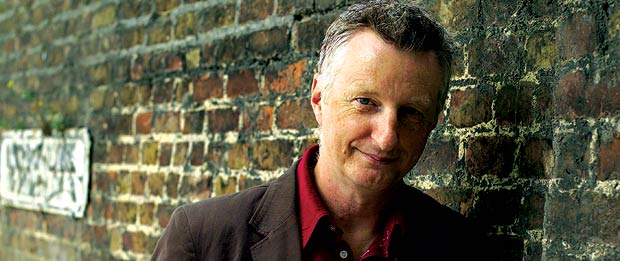
Billy Bragg
biography
Finding inspiration in the righteous anger
of punk rock and the socially conscious folk tradition of Woody Guthrie and Bob
Dylan, Billy Bragg was the leading figure of the anti-folk movement of the
'80s. For most of the decade, Bragg bashed out songs alone on his electric
guitar, singing about politics and love. While his lyrics were bitingly
intelligent and clever, they were also warm and humane, filled with detail and
wit. Even though his lyrics were carefully considered, Bragg never neglected to
write melodies for songs that were strong and memorable. Throughout the '80s,
he managed to chart consistently in Britain, yet he only gathered a cult
following in America, which could be due to the fact that he sang about
distinctly British subject matter, both politically and socially.
Bragg began performing in the late '70s with the punk
group Riff Raff, which lasted only a matter of months. He then joined the
British Army, yet he quickly bought himself out of his sojourn with 175 pounds.
After leaving the Army, he began working at a record store; while he was
working, he was writing songs that were firmly in the folk and punk protest
tradition. Bragg began a British tour, playing whenever he had the chance to
perform. Frequently he would open for bands with only a moment's notice; soon,
he had built a sizable following, as evidenced by his first EP, Life's a Riot
With Spy vs. Spy (1983), hitting number 30 on the U.K. independent charts. Brewing
Up With Billy Bragg (1984), his first full-length
album, climbed to number 16 in the charts.
During 1984, Bragg became a minor celebrity in
Britain, as he appeared at leftist political rallies, strikes, and benefits across
the country; he also helped form the "Red Wedge," a
socialist musicians collective that also featured Paul Weller. In 1985,
Kirsty MacColl took one of his songs, "New England," to number seven
on the British singles chart. Featuring some subtle instrumental additions of
piano and horns, 1986's Talking With the Taxman About
Poetry reached the U.K. Top Ten.
Bragg's version of the Beatles' "She's Leaving
Home," taken from the Sgt. Pepper Knew My Father tribute album, became his
only number one single in 1988 -- as the double A-side with Wet Wet Wet's
"With a Little Help From My Friends." That
year, he also released the EP Help Save the Youth of America and the
full-length Workers Playtime, which was produced by Joe Boyd (Fairport
Convention, Nick Drake, R.E.M.). Boyd helped expand
Bragg's sound, as the singer recorded with a full band for the first time. The
following year, Bragg restarted the Utility record label as a way of featuring
non-commercial new artists. The Internationale, released in 1990, was a
collection of left-wing anthems, including a handful of Bragg originals. On
1991's Don't Try This at Home, he again worked with a full band, recording his
most pop-oriented and accessible set of songs; the album featured the hit
single, "Sexuality." Bragg took several years off after Don't Try
This at Home, choosing to concentrate on fatherhood. He returned in 1996 with
William Bloke.
In 1998, he teamed with the American alternative
country band Wilco to record Mermaid Avenue, a collection of performances based
on unreleased songs originally written by Woody Guthrie. Reaching to the
Converted, a collection of rarities, followed a year
later, and in mid-2000 Bragg and Wilco reunited for a second Mermaid Avenue
set. While touring in support of Mermaid Avenue, Vol. 2, Bragg formed the
Blokes in 1999 with Small Faces keyboardist Ian McLagan. Lu Edmonds (guitar),
Ben Mandelson (lap steel guitar), Martyn Barker (drums), and Simon Edwards
(bass) solidified the group while Bragg moved from London to rural Dorset in
early 2001. One year later, the Blokes joined Bragg for England, Half English, his first solo effort since William Bloke. In 2004 he
collaborated with Less Than Jake for "The Brightest Bulb Has Burned
Out," a track included on the Rock Against Bush,
Vol. 1 compilation. The two-CD Must I Paint You a Picture?
The Essential Billy Bragg appeared in 2003 with initial copies featuring a
third, bonus CD of collectibles and rarities. The Yep Roc label released the
box set Volume 1 in 2006. The set included seven CDs and two DVDs of previously
unavailable live footage. The label simultaneously reissued four titles from
Bragg's early back catalog in expanded editions.