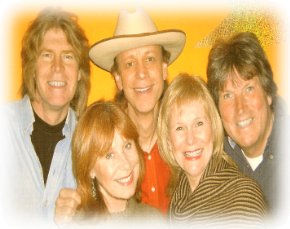
The New Seekers biography
Known
chiefly for making a Coca-Cola jingle into a massive worldwide hit, the New
Seekers ostensibly grew out of the ashes of the Australian folk-rock outfit the
Seekers ("Georgy Girl"). Although their
clear harmonies, pop leanings, and squeaky-clean image were similar to the
original band, their actual connection was tenuous at best. After the Seekers
disbanded, guitarist/vocalist Keith Potger put
together an otherwise completely new band in late 1969: female vocalists Eve
Graham and Sally Graham (no relation), guitarists/vocalists Laurie Heath and
Marty Kristian, and bassist/vocalist Chris
Barrington. Potger christened them the New Seekers
and produced their self-titled 1970 debut album, and while he did sing with
them at first, he soon retired from both performance and production to become
their manager, leaving them with no members of the original Seekers.
Thus
constituted, the New Seekers scored their first American hit with a cover of
Melanie's "Look What They Done to My Song, Ma" in late 1970.
Their biggest
success, however, came from an unlikely source: an ad jingle they recorded for
Coca-Cola, which became part of a hugely popular campaign that summer -- so
popular, in fact, that radio listeners actually called in to request the
commercial. It was decided to release the song as a single called "I'd
Like to Teach the World to Sing (In Perfect Harmony)," with the lyrics
rewritten to remove product references. It reached the U.S. Top Ten despite
stiff competition from the alternate recording. Helped by the ad campaign,
"I'd Like to Teach the World to Sing (In Perfect Harmony)" was a
smash hit all over the world, topping the charts in several countries
(including the U.K.) and giving the New Seekers their biggest hit ever.
In 1972, the
New Seekers placed second in the annual Eurovision Song Contest with "Beg,
Steal or Borrow," which was their highly successful U.K. follow-up to
"I'd Like to Teach the World to Sing"; the
title track of Circles was another hit that summer. The New Seekers kicked off
1973 by playing Richard Nixon's inaugural ball, but subsequently tried to hip
up their image and gain a little more critical respect by recording more
rock-oriented numbers (including material from the Who's Tommy) on Now; it
didn't work, and their sales began to slip as a result. Peter Doyle left the
group that summer and was replaced by Peter Oliver. The singles "You Won't
Find Another Fool Like Me" and "I Get a Little Sentimental Over
You" (featured on the 1974 album Together) returned them to the U.K. Top
Ten, but both female singers (Eve Graham and Lyn Paul) decided to leave the
group in early 1974.
That wasn't
the end of the New Seekers, although it was the end of their commercial prime. The
group re-formed in 1976 with original members Eve Graham, Marty Kristian, and Paul Layton, plus newcomers Kathy Ann Rae and
Danny Finn. They recorded the album Together Again and began playing the U.K.
cabaret circuit with other non-rock pop acts. While they would land a few minor
hits over the next two years, none were on the scale of their previous
successes, and after one final album, 1978's Anthem, Graham and Finn left the
group to marry and perform as a duo. With their departure, the New Seekers
effectively ceased to be an active recording concern. Kristian
and Layton continued to lead various New Seekers lineups
into the '80s and sporadically during the '90s, but despite continued world tours, they were strictly a nostalgia act. Peter Doyle died of throat cancer on October 13, 2001.