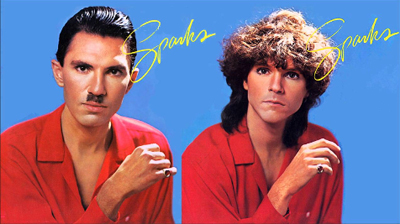
*** Sparks *** biography
Sparks
is the vehicle for the skewed pop smarts and wise-guy wordplay of brothers Ron
and Russell Mael, Los Angeles natives who spent their childhood modeling young men's apparel for mail-order catalogs.
While
attending UCLA in 1970, the Maels formed their first group, Halfnelson, which
featured songwriter Ron on keyboards and Russell
as lead vocalist; the band was rounded out by another pair of brothers,
guitarist Earle and bassist Jim Mankey, and drummer Harley Feinstein.
Halfnelson
soon came to the attention of Todd Rundgren, who
helped land the group a contract with Bearsville and
produced their self-titled 1971 debut. Their quirky, tongue-in-cheek art pop
failed to find an audience, however, and their manager successfully convinced the
Maels to change the group's name to Sparks.
While
touring the U.K., Sparks were warmly received by the British music press, and
ultimately, the Mael brothers relocated to London, leaving the rest of the band
behind; Earle Mankey subsequently became a noted producer, while Jim later
joined Concrete Blonde. In need of a new support unit, the Maels placed an
advertisement in Melody Maker, and with guitarist Adrian Fisher, bassist Martin
Gordon, and drummer Norman "Dinky" Diamond firmly in place, they
recorded 1974's glam-bubblegum opus Kimono My House, which reached the Top Five
of the U.K. album charts and spawned two major British hits, "This Town Ain't Big Enough for the Both of Us" and "Amateur
Hour."
With
new guitarist Trevor White and bassist Ian Hampton, Sparks returned later that
year with Propaganda, another U.K. smash that scored with the hits "Never
Turn Your Back on Mother Earth" and "Something for the Girl with
Everything."
By
1977's ironic Introducing Sparks, recorded with a series of Los Angeles session
players, the Mael brothers were treading water, so they enlisted disco producer
Giorgio Moroder to helm 1979's synth-powered
dance-pop confection No. 1 in Heaven, which spurred the group to renewed
success in England on the strength of the hit singles "The Number One Song
in Heaven," "Beat the Clock," and "Tryouts for the Human
Race."
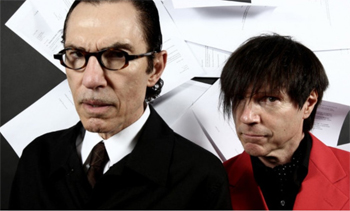
Sparks
left disco in the dust with 1981's Whomp That Sucker, recorded in Munich with a
new supporting band. In 1984 the disastrous LP Pulling Rabbits Out of a Hat
derailed any chart momentum the band had gathered at home, however, and after
1986's self-explanatory Music That You Can Dance To, Sparks
- again reduced to the core duo of Ron and Russell - recorded 1988's Interior
Design, which was followed by a long hiatus.
Outside
of composing the music for a film by Hong Kong action maestro Tsui Hark, Sparks remained silent until Gratuitous Sax and
Senseless Violins, released in 1994. Plagiarism followed four years later. With
2000's Balls, the band ushered in a more productive era, releasing Lil'
Beethoven in 2002, Hello Young Lovers in 2006, and Exotic Creatures of the Deep
in 2008.