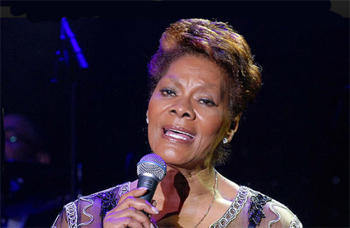
 Dionne Warwick biography
Born
Marie Dionne Warrick on December 12, 1940, in
After finishing high school in 1959, Warwick
pursued her passion at the Hartt College of Music in
Hartford, Connecticut. She also landed some work with her group singing backing
vocals for recording sessions in New York City. During one session, Warwick met
Burt Bacharach. Bacharach hired her to record demos featuring songs written by
him and lyricist Hal David. A record executive liked Warwick's demo so much
that Warwick got her own record deal.
In 1962,
Warwick released her first single, "Don't Make Me Over." It became a
hit the following year. A typo on the record led to an accidental name. Instead
of "Dionne Warrick," the label read
"Dionne Warwick." She decided to keep the new moniker and went on to
greater chart success. In 1964,
More hits, including many written by Bacharach
and David, followed as the 1960s progressed. "Message to Michael"
made the Top 10 in 1966, and her version of "I Say A Little Prayer"
climbed as high as the No. 4 spot the following year. Warwick also found great
success with her contributions to movie soundtracks. The theme song for the
1967 film Alfie,
starring Michael Caine, was a solid success for her,
as was "Valley of the Dolls," from the 1968 movie of the same name.
In 1968, Warwick had other hits, including her
trademark tune "Do You Know the Way to San Jose," which earned
Warwick her first Grammy Award. That same year, Warwick made history as the
first African-American woman to perform for Queen Elizabeth II in England.
Warwick
reached the top of the pop charts for the first time in 1974 with "Then
Came You," which she recorded with the Spinners. But then Warwick suffered
a career slump for several years. In 1979, she made a triumphant return to the
charts with the ballad "I'll Never Love This Way Again." She also
soon became a fixture on television with the music program Solid Gold, which she hosted in the early
1980s. Warwick also had several successful collaborative efforts. In 1982, she
made the charts with "Friends In Love" with
Johnny Mathis, and "Heart Breaker" with Barry Gibb.
Around this time, Warwick scored one of the
biggest hits of her career with "That's What Friends Are For." Stevie
Wonder, Elton John and Gladys Knight also appeared on this 1985 No. 1 hit,
which was an AIDS charity single written by Bacharach and Carole Bayer Sager.
"Love Power," her duet with Jeffrey Osbourne
two years later, marked her next major hit.
In 2012,
Warwick's personal life overshadowed her
musical talents the following year. In March 2013, she made headlines when she declared
bankruptcy.