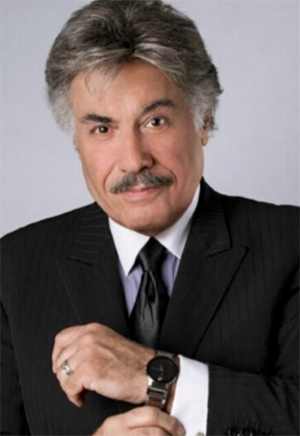
Tony Orlando & Dawn biography
In conjunction
with his backing duo Dawn, singer Tony Orlando was one of the biggest pop stars
of the early '70s, best remembered for the mammoth hit "Tie a Yellow
Ribbon 'Round the Ole Oak Tree." Born Michael Anthony Orlando Cassavitis in New York City on April 3, 1944, he entered
the music business at the age of 16 following a successful audition for producer
Don Kirshner. Orlando's first hit, 1961's "Halfway to Paradise," was
written for him by Carole King, who also authored the Top 20 follow-up,
"Bless You." However, after scoring a minor chart entry with
"Happy Times (Are Here to Stay)," his career ground to a halt when Kirshner
sold his company to Screen Gems, which showed considerably more interest in
publishing music than recording it. Orlando was given a job with the company's
promotional department, and in 1967 he was tapped by Columbia Records to head
their own publishing division, April-Blackwood Music.
In early 1970, Orlando
received a call from Bell Records producer Hank Medress requesting that he lay
down a lead vocal over a demo recorded by a Detroit-based act called Dawn. The
duo, consisting of vocalists Telma Hopkins and Joyce
Vincent, had previously backed up singers including Edwin Starr, Johnnie Taylor,
Freda Payne, and others; according to legend, Orlando never even met either
singer until well after the record, "Candida," became a massive hit,
rising to number three on the singles charts. Orlando quickly agreed to cut
another record with Dawn, nonetheless adamantly insisting on keeping his day
job; titled "Knock Three Times"; the single topped the charts in
early 1971, and finally Orlando returned to music full-time, signing with Bell
and going on tour with Hopkins and Vincent under the banner of Dawn, Featuring
Tony Orlando.
Released in 1973, "Tie a
Yellow Ribbon" became Orlando's biggest hit yet, and was named the
top-selling single of the year. Long after its original success, the song
re-entered the public consciousness with renewed force in 1981, becoming
something of anthem during the Iranian hostage crisis as American citizens
regularly tied yellow ribbons around trees as a symbol of their hopes and prayers
for the hostages' safe return. By that time, Tony Orlando & Dawn had long
since dissolved: after scoring subsequent Top Ten hits with 1973's "Say,
Has Anybody Seen My Sweet Gypsy Rose?," 1974's "Steppin'
Out (Gonna Boogie Tonight)," and 1975's
chart-topping "He Don't Love You (Like I Love You)," the group's
popularity began to slip, although they enjoyed considerable success with their
CBS television variety series. However, in July 1977, Orlando -- reeling from
the recent deaths of his sister and his close friend Freddie Prinze, as well as mounting drug problems -- announced his
retirement, giving up show biz in the name of Christianity.
Orlando's retirement proved
short-lived, and just four months later, he made a solo comeback in Las Vegas; Dawn
attempted to forge on without him, but enjoyed little success on their own and
eventually disbanded. In the meantime, Orlando signed to the Casablanca label,
but as a solo performer he fared poorly, scoring only one charting single,
1979's "Sweets for My Sweet." The following year, he joined the cast
of Broadway's Barnum; Hopkins mounted an acting career as well, to
significant success. After appearing regularly on the sitcom Bosom Buddies,
she joined the cast of Gimme a Break
and, later, the long-running Family Matters. In 1988, Tony Orlando and Dawn
briefly re-formed, and two years later -- already a staple of the Las Vegas
club circuit -- he became the latest in a long line of celebrities to open a theater in the tourist community of Branson, Missouri,
founding the Tony Orlando Yellow Ribbon Music Theater
with the promise to play some 200 dates there annually.