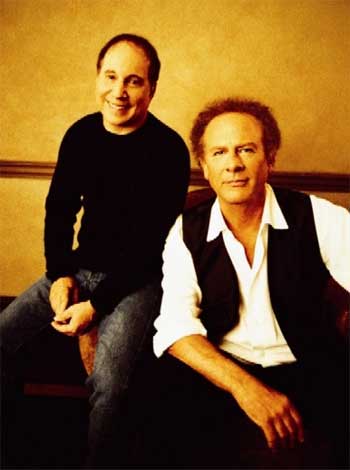
Simon & Garfunkel biography
The most
successful folk-rock duo of the 1960s, Paul Simon
and Art Garfunkel crafted a series of memorable hit
albums and singles featuring their choirboy harmonies, ringing acoustic, and
electric guitars; and Simon's acute, finely wrought songwriting. The pair always inhabited the
more polished end of the folk-rock spectrum, and were
sometimes criticized for a certain collegiate sterility. Many
also feel that Simon,
as both a singer and songwriter, didn't truly blossom until
he began his own hugely successful solo career in the 1970s. But the best of S&G's work
can stand among Simon's best material, and the duo did
progress musically over the course
of their five albums, moving from basic folk-rock
productions into Latin rhythms and gospel-influenced arrangements that foreshadowed Simon's eclecticism
on his solo albums.
Simon & Garfunkel's recording history actually predated their first mid-'60s hit by almost
a decade. Childhood friends while growing
up together in
By the early '60s, both Simon
and Garfunkel were coming under the
influence of folk music. When they
reteamed, it was as a folk duo, though
Simon's pop
roots would serve the act
well in their material's synthesis of folk and pop influences. Signing to
The Simon & Garfunkel story might have ended
there, except for a brainstorm of their producer, Tom Wilson (who also produced several of Bob Dylan's early albums). Folk-rock was taking off in 1965,
and Wilson, who had helped Dylan
electrify his sound, took the strongest
track from S&G's debut,
"Sounds of Silence," and embellished it with electric guitars,
bass, and drums. It got to number one
in early 1966, giving the duo the
impetus to reunite and make a serious go at a recording career, Simon
returning from the
Simon & Garfunkel's early albums were erratic, but they steadily improved as Simon sharpened his songwriting, and as the duo became more comfortable and adventurous in the studio. Their execution was so clean and tasteful that it cost them some hipness points during the psychedelic era, which was a bit silly. They were far from the raunchiest thing going, but managed to pull off the nifty feat of appealing to varying segments of the pop and rock audience -- and various age groups, not just limited to adolescents -- without compromising their music. Parsley, Sage, Rosemary and Thyme (late 1966) was their first really consistent album; Bookends (1968), which actually blended previously released singles with some new material, reflected their growing maturity. One of its songs, "Mrs. Robinson," became one of the biggest singles of the late '60s after it was prominently featured in one of the best films of the period, The Graduate (which also had other Simon & Garfunkel songs on the soundtrack).
It was unsurprising, in retrospect, that the duo's partnership began to weaken in the late '60s. They had known each other most of their lives, and been performing together for over a decade. Simon began to feel constrained by the limits of working with the same collaborator; Garfunkel, who wrote virtually none of the material, felt overshadowed by the songwriting talents of Simon, though Garfunkel's high tenor was crucial to their appeal. They started to record some of their contributions separately in the studio, and barely played live at all in 1969, as Garfunkel began to pursue an acting career.
Their final studio album, Bridge Over Troubled Waters, was an enormous hit, topping the charts for ten weeks, and containing four hit singles (the title track, "The Boxer," "Cecilia," and "El Condor Pasa"). It was certainly their most musically ambitious, with "Bridge Over Troubled Waters" and "The Boxer" employing thundering drums and tasteful orchestration, and "Cecilia" marking one of Simon's first forays into South American rhythms. It also caught the confused, reflective tenor of the times better than almost any other popular release of 1970.
That would
be their last album of new material. Although they didn't
necessarily intend to break up at the time, the break from
recording eventually became permanent; as Simon
began a solo career that brought him
as much success as the S&G
outings, and Garfunkel pursued simultaneous acting and recording careers. They did reunite
in 1975 for a Top Ten single,
"My Little Town," and periodically performed together since without ever
coming close to generating albums of new material. A 1981 concert in